
Speakers
Conference Keynote Speakers
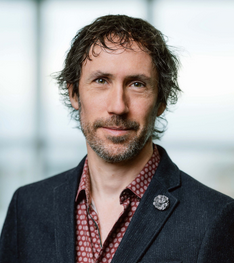
Kevin Leyton-Brown is a professor of Computer Science and a Distinguished University Scholar at the University of British Columbia. He holds a Canada CIFAR AI Chair at the Alberta Machine Intelligence Institute and is an associate member of the Vancouver School of Economics. He received a PhD and an M.Sc. from Stanford University (2003; 2001) and a B.Sc. from McMaster University (1998). He studies artificial intelligence, mostly at the intersection of machine learning with either the design and operation of electronic markets or the design of heuristic algorithms. He has helped to design a government auction that reallocated North American radio spectrum; an electronic market that linked Ugandan farmers with buyers for surplus crops; and widely used open source software such as SATzilla (an algorithm portfolio for solving satisfiability problems), Mechanical TA (peer grading software used at universities around the world), and AutoWEKA (a machine learning tool that both selects a model family and optimizes its hyperparameters). He is increasingly interested in large language models, particularly as components of agent architectures. He believes we have both a moral obligation and a historical opportunity to leverage AI to benefit underserved communities, particularly in the developing world.

Sheila McIlraith is a Professor in the Department of Computer Science, University of Toronto, a CIFAR AI Chair (Vector Institute), and an Associate Director and Research Lead of the Schwartz Reisman Institute for Technology and Society. McIlraith's research is in the areas of AI knowledge representation, automated reasoning and machine learning. Her research focuses on AI sequential decision making, broadly construed, through the lens of human-compatible AI. McIlraith is a fellow of the ACM, a fellow of AAAI, and a Schmidt Sciences AI2050 Senior Fellow. She is a member of the Canadian AI Safety Institute (CAISI) Research Council and is currently serving as Chair of the Standing Committee of the One Hundred Year Study on Artificial Intelligence (AI100). McIlraith has served on the editorial boards of AIJ, JAIR, and Artificial Intelligence Magazine. She has also served as program co-chair of AAAI2018, KR2012, and ISWC2004, as well as conference co-chair of ICAPS2024. McIlraith and co-authors have been honoured with a number of paper recognitions, including three test-of-time style awards. She has also been honoured with a CAIAC Lifetime Achievement Award for research excellence in AI. McIlraith initiated and co-leads the University of Toronto Embedded Ethics Education Initiative (E3I) with annual student enrollment in E3I programming nearing 10,000.
Speakers for our Platinum Sponsors
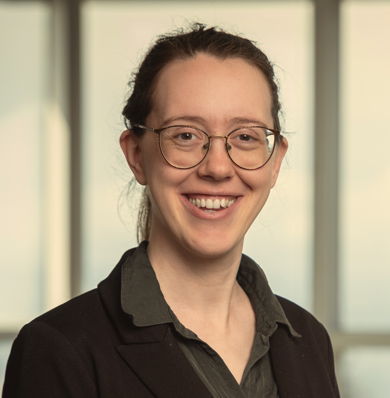
Kelsey is an assistant professor of Computer Science and Psychology at UBC, a CIFAR Azrieli Global Scholar in the Learning in Machines and Brains program, and a CIFAR AI Chair at Vector. Previously, she was a Senior Research Scientist at Google DeepMind. She received her PhD from MIT in Brain and Cognitive Sciences. Her work has received awards including the international Glushko prize for best dissertation in cognitive science and best paper awards from Robotics: Science and Systems (R:SS) and multiple machine learning conference workshops. Spanning robotics, machine learning, and cognitive science, her work aims to elucidate the mechanisms that give rise to adaptive and efficient learning, especially in the domain of physical problem-solving.